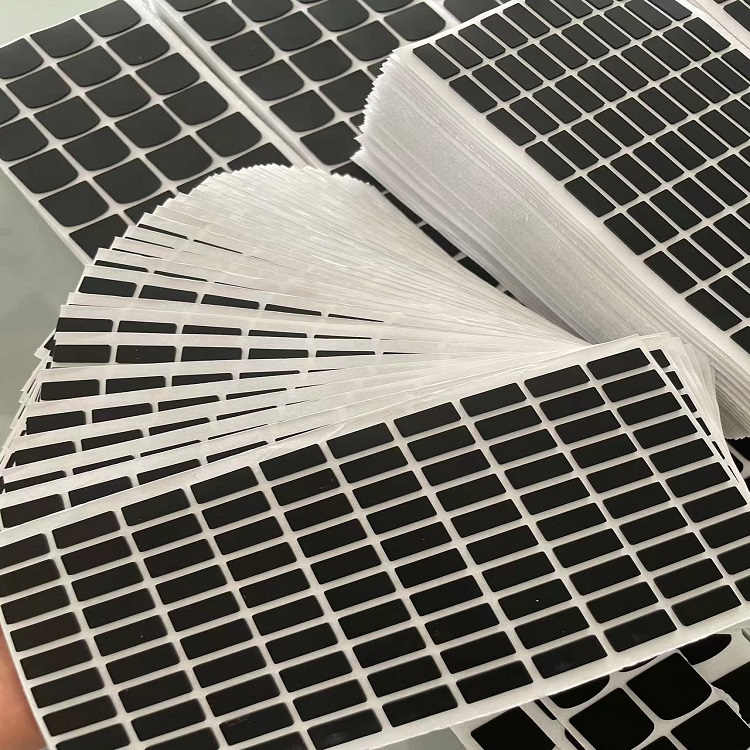
A foam gasket that seals perfectly on day one can be flat by month eighteen. The property that predicts this is compression set — the percentage of thickness the foam permanently loses after being held compressed. It is the most important datasheet line for a sealing foam, and the most commonly ignored.
What the number means
Compression set is tested by compressing the foam (typically 25% or 50%) at elevated temperature for 22–72 hours, then measuring recovered thickness after relaxation. A value of "<2% ( ASTM D3574, 50%, 22h @ 70°C )" means the foam bounces back almost fully — the seal keeps force for years. A value of 10–25% means the foam takes a permanent flatten: gaps open, dust enters, water-seal ratings quietly disappear.
Family comparison
| Foam family | Typical compression set | Best use |
|---|---|---|
| PORON-class urethane | <2% | Long-term gaskets, wearables, sealed enclosures |
| Silicone foam | <5% | High temperature, outdoor, automotive |
| EPDM / CR foam | 5–15% | Cost-driven industrial seals |
| EVA foam (closed cell) | 10–25% | Cushioning, not long-term sealing |
Design rules that follow
1) If the part must seal for the product's lifetime, start at PORON-class urethane or silicone foam. 2) If it is a cushion or spacer where sealing is secondary, EVA is fine and cheaper. 3) Always design compression at 25–50% of thickness — below 15% the seal force is unstable, above 60% the foam stress-relaxes faster. 4) For water sealing, pair the foam choice with an IPX test target, not just a datasheet.
When you send ROTADIE a sealing application, we quote against compression targets — not just thickness and color. That is the difference between a pad and a seal.